How countries survive with no income tax
3 min read · 4 steps · Updated 1 October 2026
In short: income tax is newer than you'd think, sit on oil, tax spending instead of income, be small, and be special.

Imagine earning a salary and paying no income tax on it. None. In the UAE, Saudi Arabia, Qatar, Kuwait, Bahrain, Brunei, Monaco and the Cayman Islands, that's normal. And these aren't poor places. Some are among the richest in the world. So how do they pay for roads, hospitals and airports?
This is Countries Compared. Today: three ways a country can run without taxing your income, and what it costs.
Step by step
Income tax is newer than you'd think
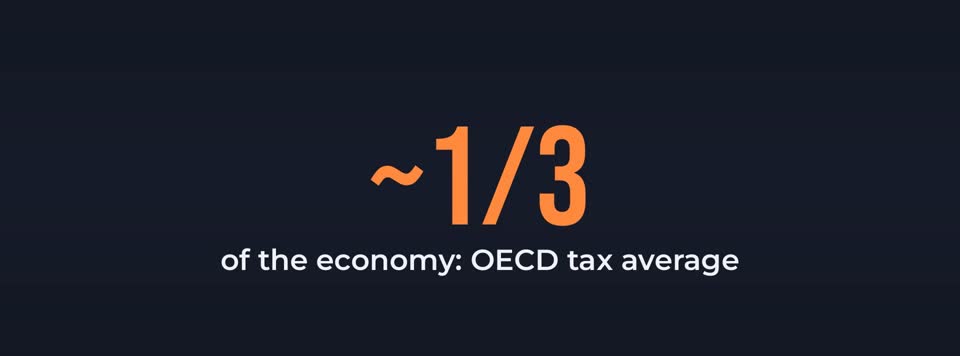
Britain introduced income tax in 1799, to pay for the war against Napoleon. It was meant to be temporary. The United States made it permanent in 1913. Monaco, on the other hand, abolished it in 1869, and never brought it back. Today, in rich OECD countries, all taxes together average about a third of the economy.

Sit on oil
None of the six Gulf monarchies taxes ordinary salaries. Instead, the state earns money directly from oil and gas. Governments don't need to tax people when they own what's under the ground.
In Saudi Arabia, oil still brings in more than half of all government revenue. In Kuwait and Qatar, it's a much bigger share.
Political scientists call this a rentier state. The government lives on resource income, and hands out jobs, subsidies and services to citizens. Some researchers argue it changes politics too. If a government doesn't need your taxes, it may feel less need to listen to you. Others say that's too simple.
Some Gulf states also save. Kuwait set up the world's first sovereign wealth fund in 1953, and in 1976 a Future Generations Fund, to keep money for the day the oil runs out. The idea? Turn oil under the ground into investments above it.
Tax spending instead of income
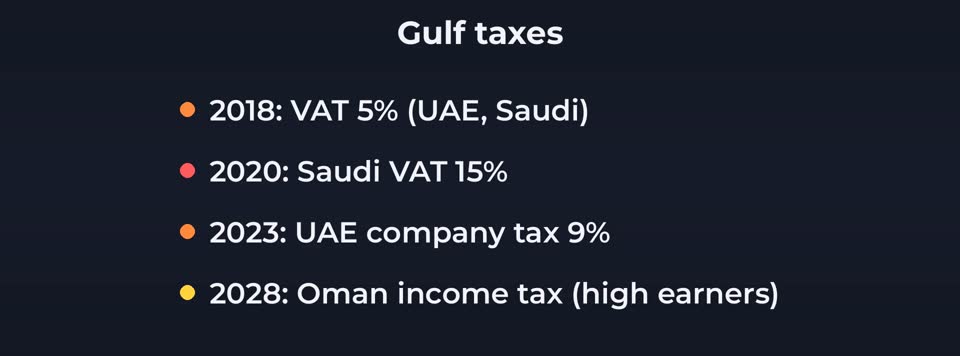
In 2018, the UAE and Saudi Arabia introduced value added tax, a tax on what you buy, at 5 percent. Saudi Arabia tripled it to 15 percent in 2020. Bahrain and Oman followed with their own VAT. Qatar and Kuwait still have none. In 2023, the UAE started taxing company profits, at 9 percent. And from 2028, Oman plans to become the first Gulf state with a personal income tax. 5 percent, but only for high earners.

Be small, and be special
Monaco has had no income tax for more than 150 years, except for French citizens, who are taxed by France. Much of its state revenue comes from VAT, and from property and business taxes. The famous casino? Only a small slice. The Cayman Islands charge nothing on income. Instead, a big share of the government's revenue comes from fees paid by companies and investment funds registered there.
Good to know
Bermuda has a payroll tax instead. The Bahamas relies on VAT. Brunei, like the Gulf, has oil and gas. And one catch for Americans. The United States taxes its citizens wherever they live. Moving to Dubai doesn't change that.
So what's the catch?
When oil prices fall, so do budgets. Many Gulf budgets only balance when oil is well above 70 or 80 dollars a barrel. Taxes on spending take a bigger bite out of poorer people's incomes. And there's global pressure too. In 2021, more than 130 countries agreed on a 15 percent minimum tax for big multinationals. Even Bermuda introduced a corporate tax.
Compare Norway. It has one of the world's biggest oil fortunes, a fund worth around two trillion dollars, and Norwegians still pay full income tax. Norway chose to save its oil money for the future, and spend only a small share of it each year.
In short: There's no free lunch. In a country with no income tax, someone still pays. Oil buyers, shoppers, companies or foreign investors. The real question isn't whether tax is paid. It's who pays, and how visible it is.
- OECD Revenue Statistics 2025
- IMF Regional Economic Outlook (Gulf fiscal breakevens)
- Kuwait Investment Authority
- UAE Ministry of Finance (VAT 2018, corporate tax 2023)
- Saudi ZATCA (VAT 15% 2020)
- Oman Tax Authority (personal income tax from 2028)
- Monaco government budget
- Cayman Islands government budget
Rules and prices change. Check the official source before you act.